

Free text to speech

Practical tutorial

How to use text to speech ai voice for your next script

If you are learning how to use text to speech ai voice, first decide whether your words are ready to read aloud. A finished script needs a listening pass; a rough draft needs editing before you judge the voice.

Review the output before sharing
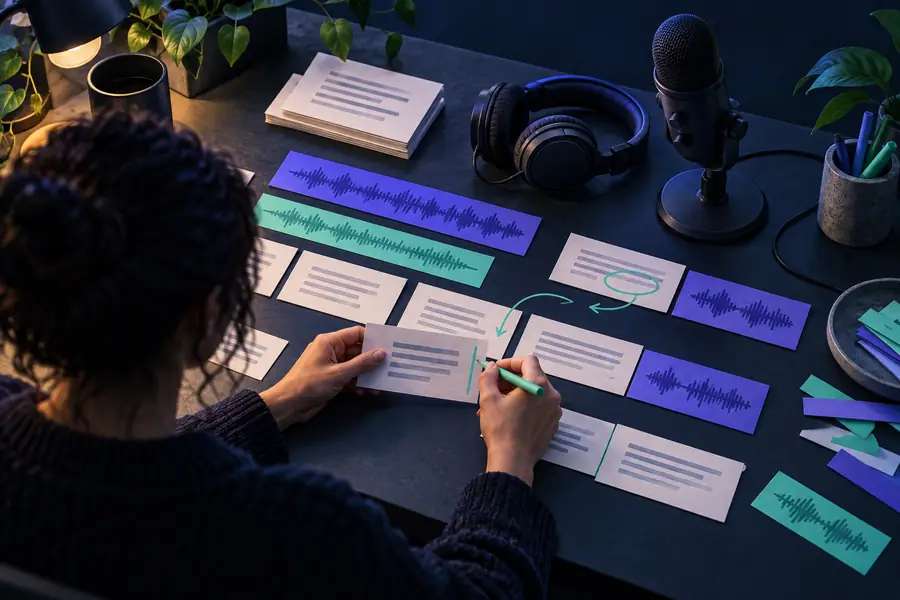
Text To Speech landing visual

decide which case you are (decision table)

The key decision is whether the script already says exactly what you want listeners to hear. Pick the matching path before you compare voices.

  1. 1

    Check whether the wording is final

    Read your text once without editing as you go. If the message, names and order are correct, take path A. Text to speech will speak the words you supply; a different voice will not repair an unclear sentence. For a short announcement, even one missing date or awkward transition is a reason to revise first.

  2. 2

    Choose path B for a working draft

    If your notes contain fragments, abbreviations or instructions meant only for you, take path B. Rewrite them as sentences a listener can follow. Expand any term whose spoken form could be ambiguous, and separate ideas with punctuation before testing an AI voice.

  3. 3

    Identify what you need to check

    For either path, choose a short passage that includes the trickiest material: a proper name, number, URL or change of tone. Test that passage first. Then check the complete script for omissions, pacing and meaning rather than assuming one convincing sentence proves the whole recording works.

path A

Your wording is approved. Keep it intact while you test whether the spoken delivery makes the message easy to understand.

path B

Your draft still needs shaping. Edit for a listener before asking an AI voice to read it.

Illustrative visual for a draft before spoken review Working draft
Illustrative visual for a script after spoken review Listener-ready script
These images illustrate the editing workflow, not a verified transformation of one script. For example, change “Museum—10, main hall, ask desk” to “The museum opens at ten. Meet us in the main hall, and ask at the desk if you need help.” Text to speech makes the revised sentence audible, but you must confirm that “ten” means the intended time. Read the new version aloud yourself, test a short excerpt, and fix any phrase that still requires a listener to guess.

final check

Listen as an audience member would. Text to speech can reveal problems in a script, but it cannot make editorial or factual decisions for you.

It cannot verify your facts

A fluent AI voice can make an incorrect date, price or name sound authoritative. Listen specifically for numbers and claims, then compare them with an approved source before publishing.

Workaround

Check the source text and confirm every factual detail separately.

It cannot guarantee a particular pronunciation

Names, acronyms and unfamiliar terms can sound different from what you intended. A sentence that looks clear on screen may be confusing when heard only once.

Workaround

Test difficult terms in context and revise the written form if listeners would misunderstand it.

It cannot infer your intended emotion

An AI voice may deliver sensitive or playful copy in a way that misses your purpose. Punctuation helps with structure, but it does not guarantee the tone a human speaker would choose.

Workaround

Use plain wording that conveys the intent, then listen with the intended audience in mind.

It cannot grant usage rights

Generating speech does not establish who owns a script or whether you may use a particular voice in a project. Rights and permitted uses depend on the material and the service terms.

Workaround

Use text you have permission to use and check applicable terms before distribution.

Final check for each path

The same listening test serves different purposes depending on whether you began with approved copy or a working draft.

Path A: finished script
Path B: rough draft

Starting point

Path A: finished script

The words and their order are already approved.

Path B: rough draft

Notes or sentences still need editing for a listener.

First action

Path A: finished script

Test a representative excerpt without changing its meaning.

Path B: rough draft

Turn fragments into complete, speakable sentences.

Main question

Path A: finished script

Does the delivery make the approved message clear?

Path B: rough draft

Does the rewritten message say what you meant?

Listen for

Path A: finished script

Awkward pauses, crowded sentences and unclear names.

Path B: rough draft

Literal reading of notes, missing context and ambiguous numbers.

Best revision

Path A: finished script

Adjust sentence boundaries while preserving approved facts.

Path B: rough draft

Fix the source wording, then run the listening test again.

Ready to share when

Path A: finished script

The spoken version matches the approved script and is understandable without reading along.

Path B: rough draft

The revised script is accurate, complete and understandable when heard once.

Ready to hear your draft?

Bring a short, representative passage to Text To Speech and listen for meaning before judging style. Whether you followed path A or path B, compare what you hear with the words you intended to communicate. Revise the script, test it again and review any terms or usage conditions relevant to your project.

Try your script
  • Start with the passage most likely to cause confusion
  • Check the spoken message against the source text
  • Keep the final listening pass separate from fact-checking

tutorial FAQ

Rewrite fragments as complete sentences before testing a voice. Listen to a short excerpt, correct anything that sounds unclear, and repeat until the words convey your intended meaning. The audio helps you review the draft; it does not replace editing.

Edit the script first if the meaning is uncertain. Once the words are clear, listen to how a voice delivers them. Comparing voices against a flawed draft can distract you from problems every version will still contain.

Start with an excerpt containing a name, number, abbreviation or difficult transition. Those details are more useful for a first text to speech check than an easy opening line. If they sound clear, listen through the entire script for pacing and omissions.

If instructions are included in the text being spoken, they may be treated as part of the script. Remove production notes from the spoken text and use ordinary sentence breaks where you want the listener to hear a transition. Test the edited passage rather than assuming a direction will be interpreted.

Natural delivery is only one check. Confirm the script's facts, the pronunciation of important terms and your rights to use the text and output. A final listen without looking at the script can also reveal places where a new listener may misunderstand the message.

Create audio
Create audio